Project Cycle Management is a structured approach to manage multiple projects or programmes and to improve the quality of projects by learning from one project and applying the lessons in the following ones. It allows everyone working on the project to identify and monitor how the project is progressing; and whether there are any issues with particular aspects of the deliverables.
Afub is Attending 1st African Conference on Deafblindness From 12th-14th May 2022
AFUB is attending the 1st Africa Conference on Deaf Blindness under the theme: meeting the sustainable development goals opportunities and challenges.
The conference offers forum to discuss the future of deafness and services in Africa
Togo: Celebration of the International White Cane Day 2021
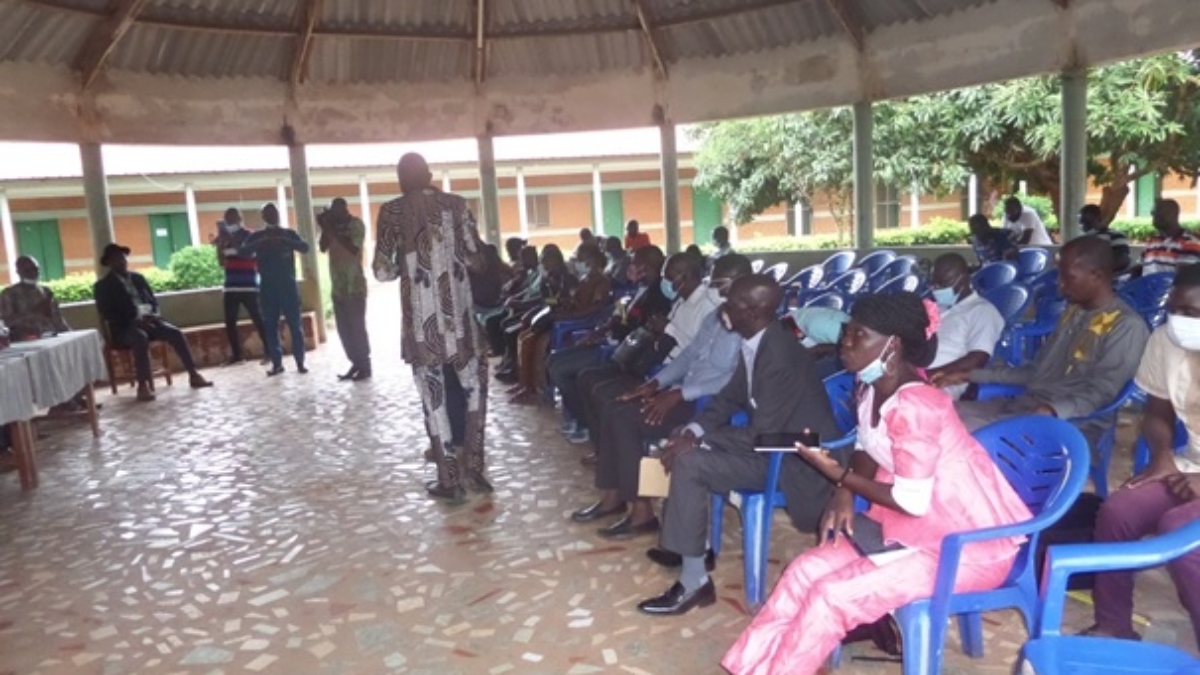
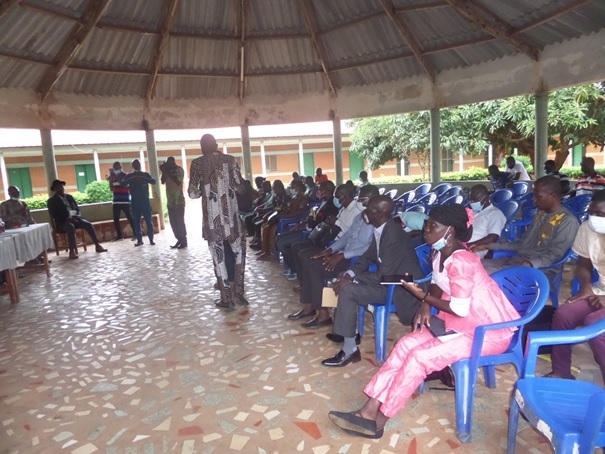
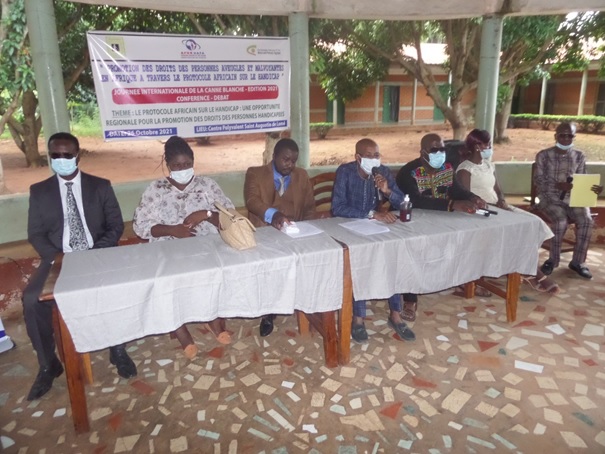
Despite the current context of the COVID 19 pandemic, on Tuesday, October 26, 2021, the Togolese Association of the Blind (ATA) with the support of the ADP Project (African Disability Protocol) celebrated the 2021 International White Cane Day under the theme chosen by Togo was: “the white cane and its carrier, what a look during and after COVID19“. This theme was debated throughout October on radio and television channels.


The glamorous afternoon event was opened by welcome remarks from the President of ATA and followed by the Vice-President of the FETAPH who set the ball rolling.
The climax of the celebration was marked by a conference-debate under the theme: “The African protocol on disability: a regional opportunity for the Promotion of the Rights of Persons with Disabilities”. Several well know individuals participated in this conference: the members of the Monitoring Committee of the ADP Project, the sister Associations of the ATA, the representatives of the FETAPH (Togolese Federation of Associations of Persons with Disabilities), the representatives of the international organizations intervening in the field of disability and media people. The panel discussion was moderated by Mr. MADOU Yaovi, who is visually impaired and has a doctorate in Public Law. Dr. MADOU Yaovi is also an associate assistant to the Public Universities of Togo.
Subsequently, Dr. BADAKU Maurice who holds a doctorate degree in education science took to the floor to raise public awareness on the use of the white cane. Dr. BADAKU Maurice is also a special education teacher and trainer of trainers in inclusive education / visual impairment and braille. It was also during this occasion that the ADP project was presented to the public for the first time after its successful launch in Togo by the project country coordinator.
At last, the highly anticipated moment came to pass when Dr. MADOU, the speaker of the day began his presentation with the definition of terms. He then highlighted the importance of this innovative protocol by explaining each article in simple French. He concluded by calling upon decision-makers at all levels to contribute towards the ratification of this continental legal instrument and to take measures for its effective implementation , keeping in mind that, each individual is a potential handicapped person.
Declarations by Participants Africa Regional Workshop on the Marrakesh Treaty Nairobi, 29th – 30th November 2021 Panari Hotel
We, participants to the Africa Regional Workshop on the Marrakesh Treaty held on 29th to 30th November 2021 in Nairobi, Kenya;
REAFFIRMING the freedom of persons with disabilities to seek, receive and access information on an equal basis with others and through forms of communication of their choice, as defined by the Convention on the Rights of Persons with Disabilities
CONCERNED that in many African States, laws protecting intellectual property rights continue to constitute an unreasonable barrier to access by persons with disabilities to published works in formats accessible to them
ACKNOWLEDGING that the Marrakesh Treaty facilitates access to published works for persons who are blind, visually impaired or otherwise print disabled by requiring Contracting Parties to provide, in their national copyright laws, limitations or exceptions to facilitate the availability of works in accessible format copies for beneficiary persons
APPRECIATING the partnership between the Norwegian Agency for Development Cooperation (NORAD), the International Disability Alliance (IDA), the World Blind Union (WBU), the African Disability Forum (ADF) and the African Union of the Blind (AFUB) in convening this Workshop
THEREFORE call upon;
- All African governments to expedite the ratification, implementation and enforcement of the Marrakesh Treaty and to integrate it into relevant national action plans
- Development agencies to foster partnerships and allocate resources towards advocacy for the ratification, implementation and enforcement of the Marrakesh Treaty in Africa
- Content creators and distributors in Africa to adopt inclusive publishing and distribution of content in line with the Marrakesh Treaty
- The World Blind Union to sustain the capacity development of its national members, particularly in Africa, towards advocacy for the ratification, implementation and enforcement of the Marrakesh Treaty
- The African Union of the Blind to facilitate mechanisms to popularize the Marrakesh Treaty among member states in order to expedite its ratification, implementation and enforcement
- National organizations of persons who are blind or visually impaired in Africa to provide leadership in advocating for the ratification, implementation, enforcement and monitoring of the Marrakesh Treaty in their countries.
END
African Youth Petition
We the representatives of the youth in Central, Western, Eastern and Southern African Union/Organisations/Associations of the blind having gone through an intensive three-day training and appreciating work of AFUB towards promoting the youth agenda are:
- Concerned that the AFUB constitution has not established a youth wing or a youth department in the AFUB constitution;
- Worried of the fact that some member organisations of blind and partially sighted do not allow new leadership and democratic process;
- Further concerned that some member organizations do not constitutionally recognize a youth wing;
We therefore, petition AFUB board and AFUB 9th General Assembly:
- That AFUB Board discusses and considers the need to establish a Youth Wing of AFUB and tables a memorandum for constitutional amendment at the AFUB General Assembly to that effect;
- That the assembly considers to constitutionally established youth wing of AFUB;
- That the national organizations that do not have youth wings should as a matter of urgency, be encouraged to establish one;
- That democratic practices in leadership transition should be encouraged;
- That emergence of new leaders should be encouraged;
- That the unions should be encouraged to strengthen the youth activities in the unions;
- That the national members should be encouraged to introduce initiatives of interest to the young people to encourage them to be members.
AFUB Youth Conference Held in Nairobi, Kenya
In line with AFUB ‘s objective of strengthening the self-awareness of blind and partially sighted persons and to develop sense of responsibility, one of AFUB efforts is to build the capacity of women and youth as self-advocates and to exercise self-determination and self-representation. In view of this, AFUB organized Youth’s workshop and trained them on Human Rights / CRPD/African Disability Protocol as well as the Sustainable Development Goals from 9th-11th April, 2019. Opportunity was used to discuss on how to establish AFUB Youth Committee and they came out with their action plan. In addition, there were discussions on how to use sporting activities as a tool for advocacy and for demonstrating the potentials of blind and partially sighted persons.
The main objective of the workshop was to prepare the Youth to engage with the board to establish Youth Committee for AFUB and improved capacity of the youth committee within AFUB to achieve its mandate more effectively.
a person each was selected from each of the AFUB geographical sub-regions attended the workshop. However, North Africa representative was not able to attend due to unavoidable circumstances at the Eleventh hour. Representatives from the Swedish Association of the Visually Impaired (SRF) who are knowledgeable on youth and sporting programmes and some selected AFUB staff members were present, these are:
- Central Africa representative: Ms. N’levo N’zokafouka Solene Sophia Tania-Congo Brazzaville
- East Africa representative: Ms. Sikudhani Vaiolet Sanga-Tanzania
- Southern Africa representative: Ms. Esther Yanjanani Mbite-Malawi
- West Africa representative: Ms. Nina Efedi Okoroafor-Ghana
- Eveline Angonwi-Women chair, Cameroon, Yaoundé represented the board.
- two SRF representatives; Ms. Rania Walid Mohamed and Aniina Liisa Ragna Karlsdottir-Sweden
The deliberations of the conference were in English and French with available simultaneous interpretation facilities.
The youth’s workshop considered training and introduction on Human Rights instruments such as:
- The United Nations Convention on the Rights of Persons with Disabilities (UNCRPD),
- The African Disability Protocol to the African Charter on Human and Peoples’ Rights on the Rights of Persons with Disabilities,
- The sustainable Development Goals (Agenda 2030)
- Discussions on how to use sporting activities in Africa as a tool for advocacy and for exhibiting the potentials of blind and partially sighted persons in Africa.
- Training on AFUB policy on communication,
- Training on Gender mainstreaming.
At the end of the three-day interruptions and discussions, the conference achieved the following immediate results:
- The Youth delegates developed their action plan and they were responsible for those plans.
- The Youth commenced using different platforms for communication and sharing of information among themselves and their region, especially progress of their action plans.
- The delegates have a better understanding of the key international and regional disability legislative instruments including UNCRPD, African Disability Protocol [ADP]
- Identified common sporting activities that can be jointly organized for advocacy purpose amongst the regional bodies of AFUB.
- Exchanged experiences and information between the Youth committee and the SRF representatives and discussed the way forward.
- Delegates plan to drive the establishment of youth committee of AFUB as part of AFUB’s political structure.
- Participants learned and shared from each other’s experience on youth related work.
- Participants gained a better understanding on human and disability rights.
- discussed how to use technology and communication skills as well as sports as tools for advocacy.
At the end of the forum, the youth agreed to file a petition to the general assembly on issues such as leadership in the unions, absence of established youth wings, the voice of women and youth in the society which is not heard. In view of this, the delegates agreed to influence their organizations to submit a proposal on the establishment of a youth wing or a youth department in the AFUB constitution by July. Only proposals from members who have paid their membership dues will be considered. They therefore came out with a declaration called “Nairobi Youth Declaration of AFUB”, which called the AFUB Board and General Assembly to support the establishment of Youth Committee within AFUB political structure.
Message from the President
Dear Colleagues, Members and Partners
African Union of the Blind (AFUB) and its wider membership reflects on the experiences and challenges for the previous year 2020. In this edition, AFUB, its members and stakeholders will identify strategies of surviving alongside the COVID-19 pandemic and prioritise the ratifications of the protocol on human and people’s rights on the rights of persons with disabilities in Africa, the Marrakesh treaty implementation and our inclusion in fighting COVID 19 pandemic together with other civil society players around the world.
Due to insufficient information on partially blinded persons, adequate and effective measures have not been fully adopted by African members states to ensure that blind and partially sighted persons exercise their full rights and dignity on an equal basis with others to matters related to health care education and livelihoods inclusion to all programs and projects being implemented on the African continent.
AFUB thematic areas, throughout the year 2021, will mobilize resources, advocate for inclusive policies and promote the theory of community practice as a rights-based model in order to engage public and political will to bring about change. Various challenges disrupted the way people live including blind and partially sighted persons in Africa, some of the noted immediate effect were based on their movement, access to healthcare, causing significant loss of lives.
AFUB and its members expects the African Union and its member states’ response to Covid-19 to promote universal access to health care for all groups of people inclusive of blind and partial sighted persons. Furthermore, AFUB and its members call upon African governments to put in place models of health delivery and funding for health, as well as wider issues around equitable healthcare which are disability friendly. This year AFUB will work with its members to strategically influence state and non state actors on inclusion and hereby encourage all our national members to be active at local level and share their innovation on tackling the matter with the AFUB secretariat for wider dissemination and sharing.
Your resilience to the pandemic and other social forces is very much appreciated. Stay safe, mask up, keeping your distance and practising good hygiene at all times.
Mr. Ishmael Zhou
AFUB PRESIDENT
AFUB President Mr. I. Zhou – AFUB statement for Human Rights Day 2020
AFUB President(Mr. Ishmael Zhou) On Thursday 10th December 2020, AFUB joins the rest of the world in observing Human Rights Day under the theme: Recover Better – Stand Up for Human Rights.
This year’s theme relates to the COVID-19 pandemic and focuses on the need to build back better by ensuring that Human Rights are central to recovery efforts. “We will reach our common global goals only if we are able to create equal opportunities for all, address the failures exposed and exploited by COVID-19, and apply human rights standards to tackle entrenched, systematic, and intergenerational inequalities, exclusion and discrimination. 10 December is an opportunity to reaffirm the importance of human rights in re-building the world we want, the need for global solidarity as well as our interconnectedness and shared humanity” (UN).
As advocates of persons who are blind and partially sighted and in keeping with our main priority, which is promoting full participation, equal opportunities and protecting the human rights of our members, we at AFUB have joined a number of partners including the World Blind Union, International Disability Alliance (IDA), Norwegian Association of the Blind and partially sighted (NABP), Swedish Association of the visually impaired persons (SRF) and all organisations of persons with disabilities to advocate for inclusive and accessible response to the COVID-19 pandemic. Together we have developed global initiatives with a number of stakeholders working to promote and protect the rights of persons with disabilities.
AFUB takes this opportunity to reinforce UN’s call to:
- End of discrimination of any kind: Structural discrimination and racism have fuelled the COVID-19 crisis. Equality and non-discrimination are core requirements for a post-COVID world. AFUB calls upon the African Union and its blocks to influence barrier free public policies and practices governing employment, education, health, sports and recreation including other related human rights of blind and partially sighted persons in Africa
- Encourage participation and solidarity: We are all in this together. From individuals to governments, from civil society and grass-roots communities to the private sector, everyone has a role in building a post-COVID world that is better for present and future generations. We need to ensure the voices of the most affected and vulnerable inform the recovery efforts.
- Promote sustainable development: We need sustainable development for people and planet. Human rights, the 2030 Agenda and the Paris Agreement are the cornerstone of a recovery that leaves no one behind
To “build back better“, we emphasize the need for inclusion of persons with disabilities, especially those who are blind and partially sighted, in the recovery process. This includes; ensuring that the rights enshrined in the UN Convention on the Rights of Persons with Disabilities (UNCRPD) are prioritized; continuing to work towards the achievement of the Sustainable Development Goals (SDGs); working in consultation with organizations representing persons with disabilities in decision making, development or changing of legislation or policies; and implementing inclusive COVID-19 mitigation actions so that no one is left behind.
We stand in solidarity with the UN and its partners in its call to “Stand up for human rights” as we strive to recover from this pandemic and to build a better, more inclusive and resilient society.
AFUB calls upon All African states to ratify The African Disability Protocol (ADP), and put an end to continued human rights violation, social exclusion and prejudice suffered by persons with disabilities in Africa.
AFUB President, Mr. Ishmael Zhou.
AFUB’s Message on International Women’s Day, 8th March 2019
“I can do this job eyes closed”. This statement is the boasting of an individual who masters his or her work. On the occasion of the 2019 International Women’s Day, I am proud to attribute this
claim to all women with visual impairment around Africa. With our environment generally not adapted
to our deficiency, our daily activities are a big challenge.
We therefore have to be smart and innovative in the way we do our work.
The theme of the UN Women for International Women’s Day 2019– “Think equal, build smart and innovate for change”, affirms our day to day efforts to contribute to the development of our
communities. Nevertheless, the problem is that, very few people understand and even acknowledge this
fact.
Our mission therefore, is to raise awareness on this and ensure that every woman with visual impairment sees herself as an expert who can do her job with her eyes closed in order to instil confidence around her for equal thinking. Paradigms have to shift in our favour. We need an inclusive environment which includes women, more so, women with disabilities.
As we celebrate this day, let us keep in mind that our deficiency has placed us a little above the rest and
not below. This would help endow us with the confidence to give our needed contribution in political
participation, public and family life as well as in the community and in the development of our nation.
Long live the AFUB Women’s Committee, Long live AFUB.
God bless Africa.
Madam Angonwi Nongne Eveline
AFUB Vice President;
Chairperson of AFUB Women’s Committee
Protocol to the African Charter on Human and Peoples’ Rights on the Rights of Women in Africa
CONSIDERING that Article 66 of the African Charter on Human and Peoples’ Rights provides for special protocols or agreements, if necessary, to supplement the provisions of the African Charter, and that the Assembly of Heads of State and Government of the Organization of African Unity meeting in its Thirty-first Ordinary Session in Addis Ababa, Ethiopia, in June 1995, endorsed by resolution AHG/Res.240 (XXXI) the recommendation of the African Commission on Human and Peoples’ Rights to elaborate a Protocol on the Rights of Women in Africa;